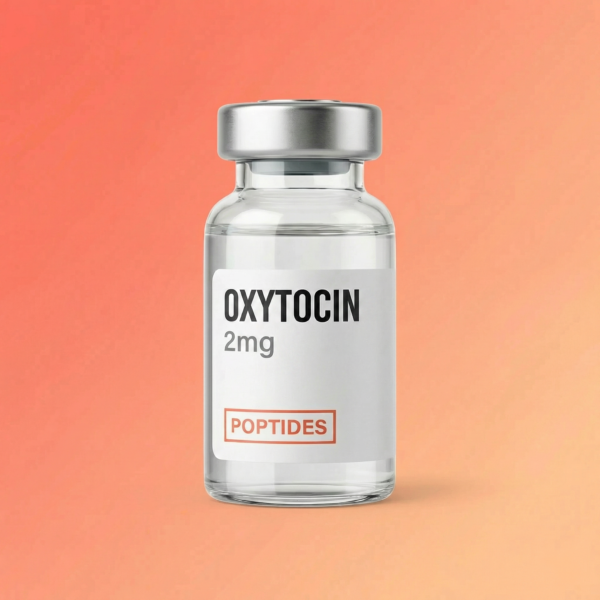
Oxytocin Acetate
Oxytocin — the bonding, trust, and social connection neuropeptide with research applications in anxiety reduction, pair bonding, wound healing, and anti-inflammatory signalling.
- Enhances social bonding, empathy, and trust via limbic system activation
- Reduces anxiety and social fear — increases approach behaviour in social contexts
- Accelerates wound healing via peripheral oxytocin receptor activation
- Anti-inflammatory — suppresses NF-kB and reduces pro-inflammatory cytokines
- Improves orgasm intensity and pair-bonding during intimate connection
Dosage Calculator
Reference dosing by experience level. For research use only — always consult a licensed healthcare provider.
⚠ For research reference only. Oxytocin Acetate is not approved for human use. Always consult a qualified healthcare professional.
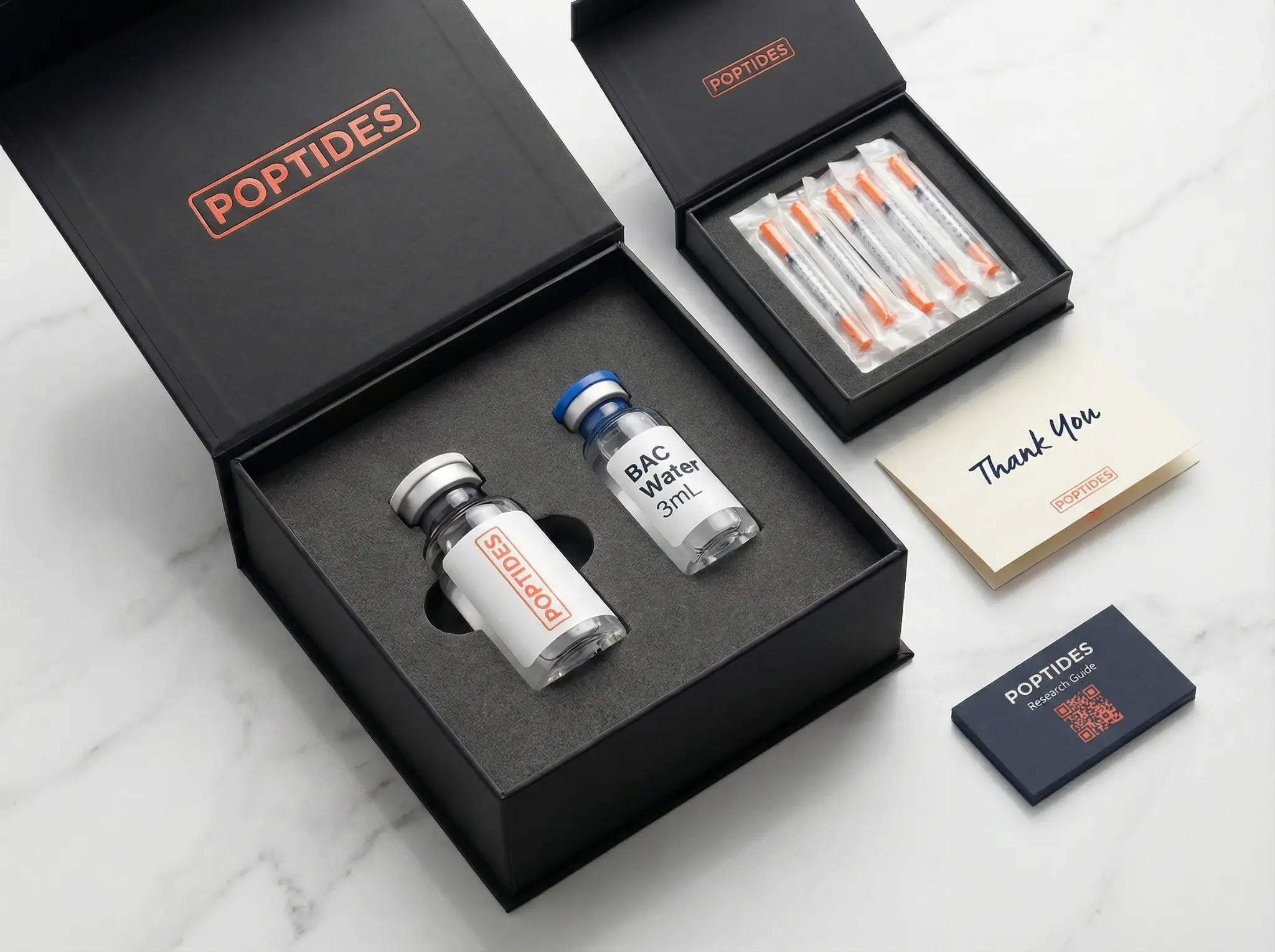
What's in the Box
Every Poptides order arrives in premium packaging, ready to use.
Oxytocin Acetate Vial
Your selected amount of lyophilized Oxytocin Acetate in a sealed, sterile glass vial with silver crimp cap. COA included on request.
BAC Water 3mL
Bacteriostatic water for reconstitution, included with every injectable peptide order. Maintains sterility for multi-dose use.
Syringe Kit
5 × insulin syringes with orange caps, individually sealed, in a dedicated Poptides-branded box.
Research Guide Card + Thank You Note
A QR code card linking to your product's research guide, plus a personal thank you note from the Poptides team.
Discreet Outer Packaging
All orders ship in plain, unmarked outer packaging with no reference to Poptides on the exterior.
How Oxytocin Acetate Works
The mechanism of action, step by step.
Limbic System Oxytocin Signalling
Intranasal oxytocin crosses the blood-brain barrier via olfactory-CNS pathways and activates oxytocin receptors in the amygdala, hypothalamus, and nucleus accumbens. This activation reduces amygdala fear responses and increases dopaminergic activity in reward circuits, producing the characteristic increases in social approach, trust, and connection.
Amygdala Fear Circuit Modulation
The amygdala is the brain's threat-detection centre. Oxytocin directly reduces amygdala reactivity to social threat cues, lowering the neurological barrier to social engagement and reducing the perception of social risk — the mechanism underlying its anxiolytic effects in social contexts.
Peripheral Wound Healing
Oxytocin receptors are expressed in skin fibroblasts and keratinocytes. Peripheral oxytocin activation accelerates wound closure by stimulating fibroblast proliferation and migration, increasing collagen deposition, and promoting re-epithelialisation — effects utilised in research on oxytocin's tissue repair properties.
Anti-Inflammatory NF-kB Suppression
Oxytocin suppresses NF-kB activation in immune cells, reducing the transcription of pro-inflammatory cytokines including IL-6, IL-1beta, and TNF-alpha. This anti-inflammatory signalling contributes to both its wound healing properties and its broader health-protective effects in chronic inflammatory states.
Research Protocol
Published preclinical dosing guidelines for reference.
The Science Behind It
Peer-reviewed research supporting the mechanism of Oxytocin Acetate.
Oxytocin increases trust in humans
In a double-blind RCT, intranasal oxytocin significantly increased the amount of money participants transferred to anonymous trustees in a trust game, demonstrating a reliable increase in social trust independent of risk attitudes — establishing the human CNS trust-signalling role of oxytocin.
Nature, 2005Intranasal oxytocin reduces amygdala reactivity to social fear
Functional MRI studies showed that intranasal oxytocin significantly reduced amygdala BOLD signal in response to fearful faces and social threat cues, establishing the neural mechanism by which oxytocin reduces social anxiety and increases approach behaviour.
Journal of Neuroscience, 2007Oxytocin accelerates wound healing and reduces inflammation in human skin
Topical and systemic oxytocin significantly accelerated wound closure, increased collagen deposition, and reduced IL-6 and TNF-alpha at wound sites in randomised skin biopsy studies, with effects mediated by oxytocin receptor activation in fibroblasts and keratinocytes.
Journal of Investigative Dermatology, 2018Customer Reviews
Verified purchases from Canadian customers.
Transformed my social anxiety management
Social anxiety has limited my professional life for 15 years. Intranasal oxytocin 30 minutes before high-stakes interactions produces a noticeable reduction in social threat perception. Conversations come more naturally. Genuinely life-changing.
The bonding effects are real
Used in the context of relationship reconnection with my partner following a difficult period. The quality of closeness and communication during our sessions was meaningfully different. Not placebo — we both noticed.
Solid for wound healing too
Running subQ oxytocin alongside BPC-157 for a chronic soft tissue injury. The healing rate has been faster than anything previous. The anti-inflammatory mechanism appears to work synergistically.
Frequently Asked Questions
You May Also Like
 Oxytocin Acetate