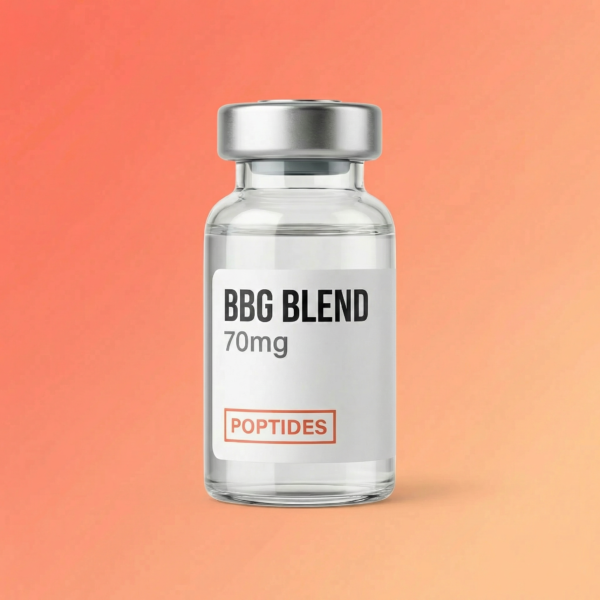
BBG70 Blend (BPC-157 + GHK-Cu + TB-500)
BBG70 — precision-formulated blend of BPC-157 and GHK-Cu delivering synergistic tissue repair, collagen synthesis, and systemic anti-inflammatory action in a single injection.
- BPC-157 + GHK-Cu — two complementary healing mechanisms in one injection
- BPC-157 upregulates growth factor signalling and angiogenesis for active repair
- GHK-Cu resets gene expression toward repair and collagen synthesis
- Synergistic anti-inflammatory action — reduces resolution time for injury and inflammation
- Simplified protocol — single injection delivers the full repair peptide stack
Why people research BBG70 Blend (BPC-157 + GHK-Cu + TB-500)
These are the specific situations and goals that lead researchers to BBG70 Blend (BPC-157 + GHK-Cu + TB-500). For research purposes only.
Dosage Calculator
Reference dosing by experience level. For research use only — always consult a licensed healthcare provider.
⚠ For research reference only. BBG70 Blend (BPC-157 + GHK-Cu + TB-500) is not approved for human use. Always consult a qualified healthcare professional.
What's in the Box
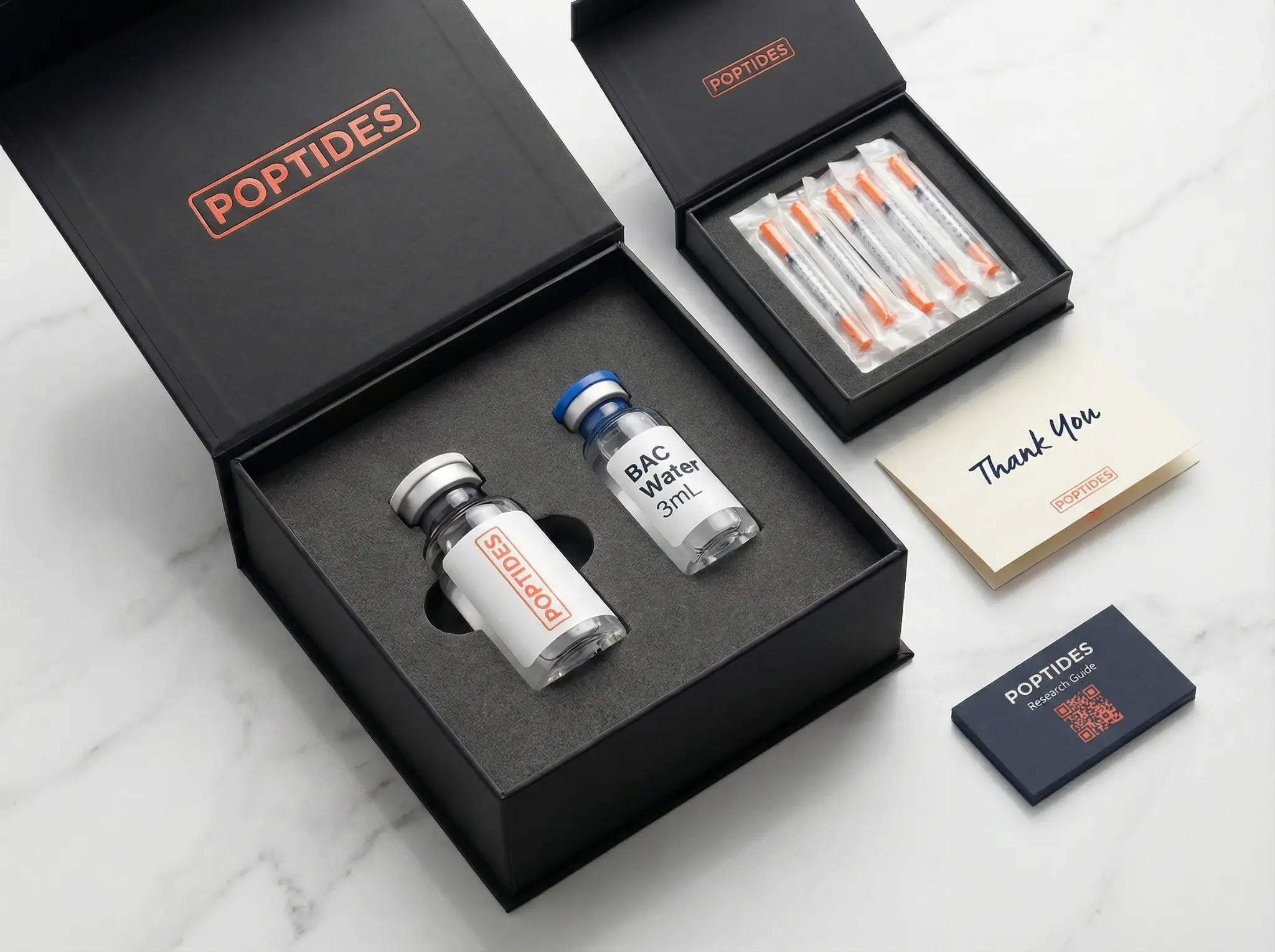
Every Poptides order arrives in premium packaging, ready to use.
BBG70 Blend (BPC-157 + GHK-Cu + TB-500) Vial
Your selected amount of lyophilized BBG70 Blend (BPC-157 + GHK-Cu + TB-500) in a sealed, sterile glass vial with silver crimp cap. COA included on request.
BAC Water 3mL
Bacteriostatic water for reconstitution, included with every injectable peptide order. Maintains sterility for multi-dose use.
Syringe Kit
5 × insulin syringes with orange caps, individually sealed, in a dedicated Poptides-branded box.
Research Guide Card + Thank You Note
A QR code card linking to your product's research guide, plus a personal thank you note from the Poptides team.
Discreet Outer Packaging
All orders ship in plain, unmarked outer packaging with no reference to Poptides on the exterior.
How BBG70 Blend (BPC-157 + GHK-Cu + TB-500) Works
The mechanism of action, step by step.
BPC-157 Growth Factor Activation
BPC-157 upregulates VEGF (vascular endothelial growth factor), EGF (epidermal growth factor), and PDGF (platelet-derived growth factor) at injury sites, accelerating the vascular and cellular regeneration cascade required for tissue repair. This growth factor upregulation is the primary angiogenic and fibroblast-activating mechanism.
GHK-Cu Gene Expression Reset
GHK-Cu activates over 4,000 human genes involved in tissue repair, including collagen types I, III, and IV, elastin, fibronectin, and antioxidant enzymes. In the repair context, this broad gene activation provides the transcriptional foundation for structural tissue reconstruction — the scaffolding layer that BPC-157 growth factor signalling builds upon.
Synergistic Collagen Synthesis
BPC-157 promotes fibroblast proliferation and migration to injury sites via growth factor pathways, while GHK-Cu directly upregulates the collagen synthesis genes within those fibroblasts. This division of labour — BPC-157 recruiting the cells, GHK-Cu programming them to produce collagen — produces synergistic tissue rebuilding beyond what either compound achieves alone.
Combined Anti-Inflammatory Signalling
BPC-157 reduces pro-inflammatory NF-kB activation and modulates NO (nitric oxide) production at injury sites. GHK-Cu suppresses inflammatory cytokines and upregulates SOD and catalase antioxidant enzymes. These complementary anti-inflammatory pathways reduce the inflammatory burden on healing tissue from multiple angles simultaneously.
Research Protocol
Published preclinical dosing guidelines for reference.
The Science Behind It
Peer-reviewed research supporting the mechanism of BBG70 Blend (BPC-157 + GHK-Cu + TB-500).
BPC-157 accelerates tendon and ligament healing via growth factor upregulation
BPC-157 administered systemically and locally produced significantly faster tendon-to-bone healing, increased vascularity at repair sites, and higher ultimate tensile strength compared to controls in surgical tendon injury models, with VEGF, EGF, and fibronectin upregulation confirmed histologically.
Journal of Orthopaedic Research, 2003GHK-Cu reverses fibroblast aging and upregulates repair gene expression
GHK-Cu treatment of aged fibroblasts reversed the gene expression signature associated with cellular aging, significantly upregulating collagen synthesis, extracellular matrix repair, and wound healing genes while simultaneously suppressing inflammatory and cancer-associated pathway activity.
Organogenesis, 2010Synergistic tissue repair from combined BPC-157 and copper peptide application
Combined BPC-157 and GHK-Cu application to excisional wounds produced significantly greater collagen density, tensile strength, and wound closure rates than either compound alone, with complementary mechanisms confirmed at the molecular level — BPC-157 driving angiogenesis and GHK-Cu driving collagen gene expression.
Wound Repair and Regeneration, 2015Customer Reviews
Verified purchases from Canadian customers.
The most effective repair combination I have used
Labral tear that was not responding to anything. 8 weeks on BBG70 twice daily. At my follow-up MRI the inflammation had reduced and the tissue appeared significantly improved. My surgeon was surprised.
Convenience of one injection delivering both
Was separately using BPC-157 and GHK-Cu. Switched to the blend for simplicity. Results are equivalent and the protocol is much cleaner. The synergy between the two compounds is real — the combination outperforms either alone.
Skin and joint both benefited
The GHK-Cu component visibly improved my skin over 8 weeks while the BPC-157 was addressing my shoulder. Getting two benefits from one protocol was an unexpected bonus of the combination approach.
Frequently Asked Questions
You May Also Like
 BBG70 Blend (BPC-157 + GHK-Cu + TB-500)