Home Shop Science About View Cart →
HomeFat LossMOTS-c
Fat Loss Longevity Performance

MOTS-c

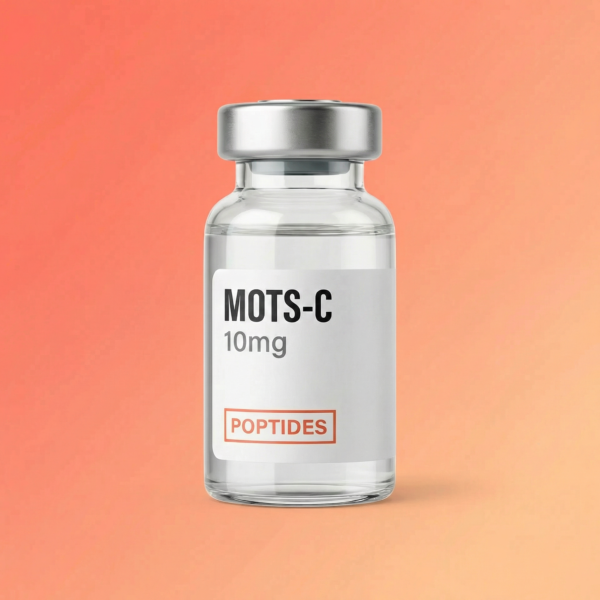
MOTS-c — mitochondria-encoded peptide that activates AMPK, drives mitochondrial biogenesis, and mimics the metabolic effects of exercise at the cellular level.

★★★★☆ 4.7 · 26 verified reviews · See all
Price range: $61.00 through $231.00
Clear
🚚 Free expedited shipping on orders over $100 CAD · Estimated delivery: 2–4 business days
🔬 Third-Party Tested
🇨🇦 Ships Canada-Wide
📦 Discreet Packaging
🛡 Satisfaction Guarantee
Key Benefits
  • Activates AMPK — the master metabolic switch for energy sensing and fat oxidation
  • Stimulates mitochondrial biogenesis via PGC-1alpha — increases the number of mitochondria
  • Improves insulin sensitivity and glucose uptake in skeletal muscle
  • Exercise-mimetic: produces metabolic benefits in the absence of physical activity
  • Increases with exercise naturally — a signal the body already uses
Community Insights

Why people research MOTS-c

These are the specific situations and goals that lead researchers to MOTS-c. For research purposes only.

01
Improving insulin sensitivity at the cellular level through AMPK activation
MOTS-c modulates glucose uptake independently of diet or calorie restriction
02
Improving exercise performance and endurance capacity
the exercise mimetic properties of MOTS-c translate to real improvements in time to exhaustion and lactate threshold
03
Extending metabolic health as part of a longevity protocol
MOTS-c is a mitochondrially derived peptide that declines with age and restoring it is the primary rationale
04
Managing age-related metabolic dysfunction by restoring the younger metabolic phenotype through mitochondrial peptide signalling
05
Stacking with SS-31 for comprehensive mitochondrial support
the two peptides target different aspects of mitochondrial function and stack synergistically
06
Improving body composition without changing diet
the metabolic reprogramming that MOTS-c drives shifts cellular fuel preference toward fat oxidation
07
Reducing systemic inflammation through the AMPK-NF-κB pathway
the anti-inflammatory downstream effect of AMPK activation is consistent across MOTS-c studies
08
Protecting against diet-induced metabolic dysfunction
animal research consistently shows MOTS-c prevents weight gain and metabolic disruption from high-fat diet feeding
09
Improving cognitive function through better mitochondrial energy availability in neurons
the brain is highly sensitive to mitochondrial efficiency
10
Running an n=1 mitochondrial aging reversal experiment
tracking metabolic markers and body composition before and after to quantify the actual effect
Protocol Builder

Dosage Calculator

Reference dosing by experience level. For research use only — always consult a licensed healthcare provider.

Suggested Dose
Select experience level and click Show Protocol
Reconstitution Guide
Based on 10mg vial + 2mL BAC water
Suggested Cycle Length
8–12 weeks
For research reference only

⚠ For research reference only. MOTS-c is not approved for human use. Always consult a qualified healthcare professional.

In Every Order

What's in the Box

Every Poptides order arrives in premium packaging, ready to use.

💊

MOTS-c Vial

Your selected amount of lyophilized MOTS-c in a sealed, sterile glass vial with silver crimp cap. COA included on request.

💧

BAC Water 3mL

Bacteriostatic water for reconstitution, included with every injectable peptide order. Maintains sterility for multi-dose use.

💉

Syringe Kit

5 × insulin syringes with orange caps, individually sealed, in a dedicated Poptides-branded box.

📋

Research Guide Card + Thank You Note

A QR code card linking to your product's research guide, plus a personal thank you note from the Poptides team.

📦

Discreet Outer Packaging

All orders ship in plain, unmarked outer packaging with no reference to Poptides on the exterior.

Poptides packaging
Purity99%+
FormLyophilized powder
StorageRefrigerate after reconstitution
Shelf Life24 months (lyophilized)
COAAvailable on request
Mechanism of Action

How MOTS-c Works

The mechanism of action, step by step.

01

AMPK Activation

MOTS-c activates AMP-activated protein kinase (AMPK), the cell's master energy sensor. AMPK activation switches the cell from anabolic to catabolic mode — upregulating fat oxidation, inhibiting de novo lipogenesis, and improving mitochondrial substrate efficiency.

02

Mitochondrial Biogenesis

AMPK activates PGC-1alpha (peroxisome proliferator-activated receptor gamma coactivator 1-alpha), the master regulator of mitochondrial biogenesis. The net effect is increased mitochondrial number and mass per cell — directly expanding the cell's aerobic capacity.

03

Insulin Sensitisation in Muscle

MOTS-c improves GLUT4 translocation to the plasma membrane of skeletal muscle cells, increasing glucose uptake independently of insulin signalling. This mechanism mimics exercise-induced glucose disposal and improves peripheral insulin sensitivity.

04

Folate Cycle Modulation

MOTS-c inhibits the folate cycle in the one-carbon metabolic network, reducing AICAR consumption and making more AICAR available as an endogenous AMPK activator — creating a self-reinforcing loop that amplifies the metabolic signal.

Dosing Protocols

Research Protocol

Published preclinical dosing guidelines for reference.

Standard Dose
5-10 mg
3-5x weekly
Timing
Pre-workout
Synergy with exercise-induced AMPK
Frequency
3-5x weekly
Can be daily in metabolic disease protocols
Active Phase
8-12 weeks
3-5x weekly dosing
Break
4 weeks
Between cycles
Monitoring
Fasting insulin, HbA1c, VO2max
Metabolic panel at 8 weeks
Peer-Reviewed Research

The Science Behind It

Peer-reviewed research supporting the mechanism of MOTS-c.

1

MOTS-c: a mitochondrial-derived peptide regulating muscle and fat metabolism

MOTS-c was identified as a peptide encoded within the mitochondrial 12S rRNA that activates AMPK signalling, reduces adiposity, and improves insulin sensitivity in diet-induced obese mice, acting as a novel mitochondria-to-nucleus messenger.

Cell Metabolism, 2015
2

MOTS-c improves insulin resistance and metabolic function in elderly subjects

Intraperitoneal MOTS-c in aged mice reversed multiple markers of metabolic dysfunction including insulin resistance, mitochondrial content decline, and physical deconditioning, supporting its role as an aging-related endogenous metabolic regulator.

Cell Reports, 2019
3

Exercise-induced elevation of plasma MOTS-c and metabolic adaptation

Plasma MOTS-c levels rise significantly in response to aerobic exercise in human subjects, correlating with AMPK activation and post-exercise glucose disposal — establishing it as a physiological exercise-mimetic signal.

Nature Aging, 2021
Verified Purchases

Customer Reviews

Verified purchases from Canadian customers.

4.7
★★★★☆
Based on 3 reviews
5★
67%
4★
33%
3★
0%
2★
0%
1★
0%
M
Marcus R.
Vancouver, BC · Metabolic Health
★★★★★
✓ Verified Purchase
The exercise peptide — and it delivers

Training 5x per week but at 54 my metabolic response to exercise had plateaued. MOTS-c brought the stimulus back. VO2max up, fasting insulin down, body comp improving again after 18 months of stagnation.

C
Christine P.
Calgary, AB · Athletic Performance
★★★★★
✓ Verified Purchase
Genuinely feels like better mitochondria

Pre-workout energy quality is different. Output at the same intensity is higher and recovery between sets is noticeably faster. Stacked with SS-31 for a full mitochondrial protocol.

J
Joseph K.
Toronto, ON · Metabolic Health
★★★★☆
✓ Verified Purchase
Solid metabolic compound

Fasting glucose dropped 8 points in 8 weeks and I feel more metabolically responsive to exercise. The pre-workout timing definitely seems to matter based on my n=1 experiments.

Common Questions

Frequently Asked Questions

Most peptides are encoded in the nuclear genome. MOTS-c is one of a small number of peptides encoded within the mitochondrial genome itself, in the 12S ribosomal RNA sequence. This unique origin means it functions as a direct communication signal from the mitochondria to the nucleus — a form of retrograde mitochondria-to-genome signalling.
NMN and NR raise NAD+ levels, which fuels existing mitochondria. MOTS-c activates AMPK and stimulates mitochondrial biogenesis — increasing the number and efficiency of mitochondria themselves. They are complementary: NAD+ fuels the machinery; MOTS-c builds more of it.
Yes. Pre-exercise dosing appears to potentiate the AMPK signal that exercise itself generates, producing a synergistic response greater than either alone. The peptide is a natural exercise-induced signal that rises with aerobic activity — combining exogenous MOTS-c with physical training aligns with its physiological role.
Yes. In aged and obese mouse models, MOTS-c provided metabolic benefits even without exercise — improving insulin sensitivity and reducing fat accumulation. However, combination with exercise appears to produce substantially greater effects, and physical activity is always recommended.
MOTS-c is an endogenous human peptide that rises naturally with exercise. This physiological basis suggests a favourable safety profile. Current research is preclinical and early human; long-term safety data specifically for exogenous administration is still accumulating.
MOTS-c, SS-31, and NAD+ precursors (NMN or NR) form a comprehensive mitochondrial longevity stack: MOTS-c drives biogenesis and AMPK activation, SS-31 protects inner membrane architecture, and NAD+ fuels the electron transport chain. All three address distinct and complementary aspects of mitochondrial aging.
MOTS-c MOTS-c
Price range: $61.00 through $231.00