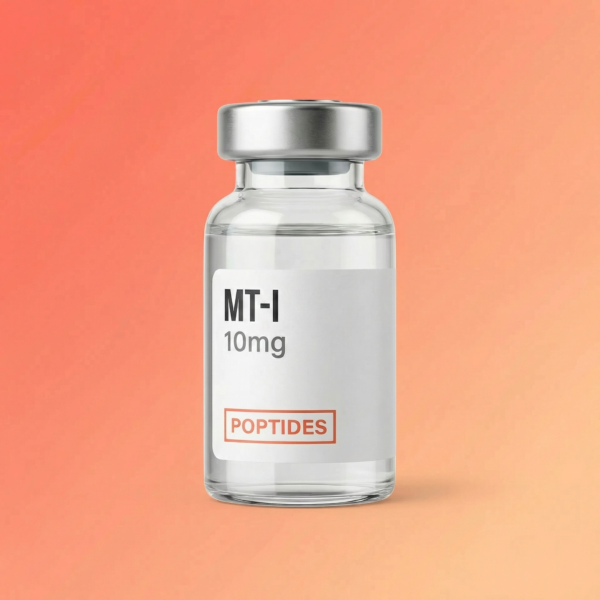
MT-I (Afamelanotide)
Melanotan 1 (Afamelanotide) — linear alpha-MSH analogue with selective MC-1R activity, producing potent tanning with a cleaner side-effect profile than Melanotan 2.
- Highly selective for MC-1R — maximum tanning stimulus with minimal MC-4R side effects
- FDA-approved analogue (as Scenesse implant) for erythropoietic protoporphyria
- Less nausea than MT2 at equivalent tanning doses
- Reduced sexual side effects compared to MT2 — cleaner tanning-focused profile
- Appropriate for fair-skinned individuals prioritising tanning without other MC effects
Why people research MT-I (Afamelanotide)
These are the specific situations and goals that lead researchers to MT-I (Afamelanotide). For research purposes only.
Dosage Calculator
Reference dosing by experience level. For research use only — always consult a licensed healthcare provider.
⚠ For research reference only. MT-I (Afamelanotide) is not approved for human use. Always consult a qualified healthcare professional.
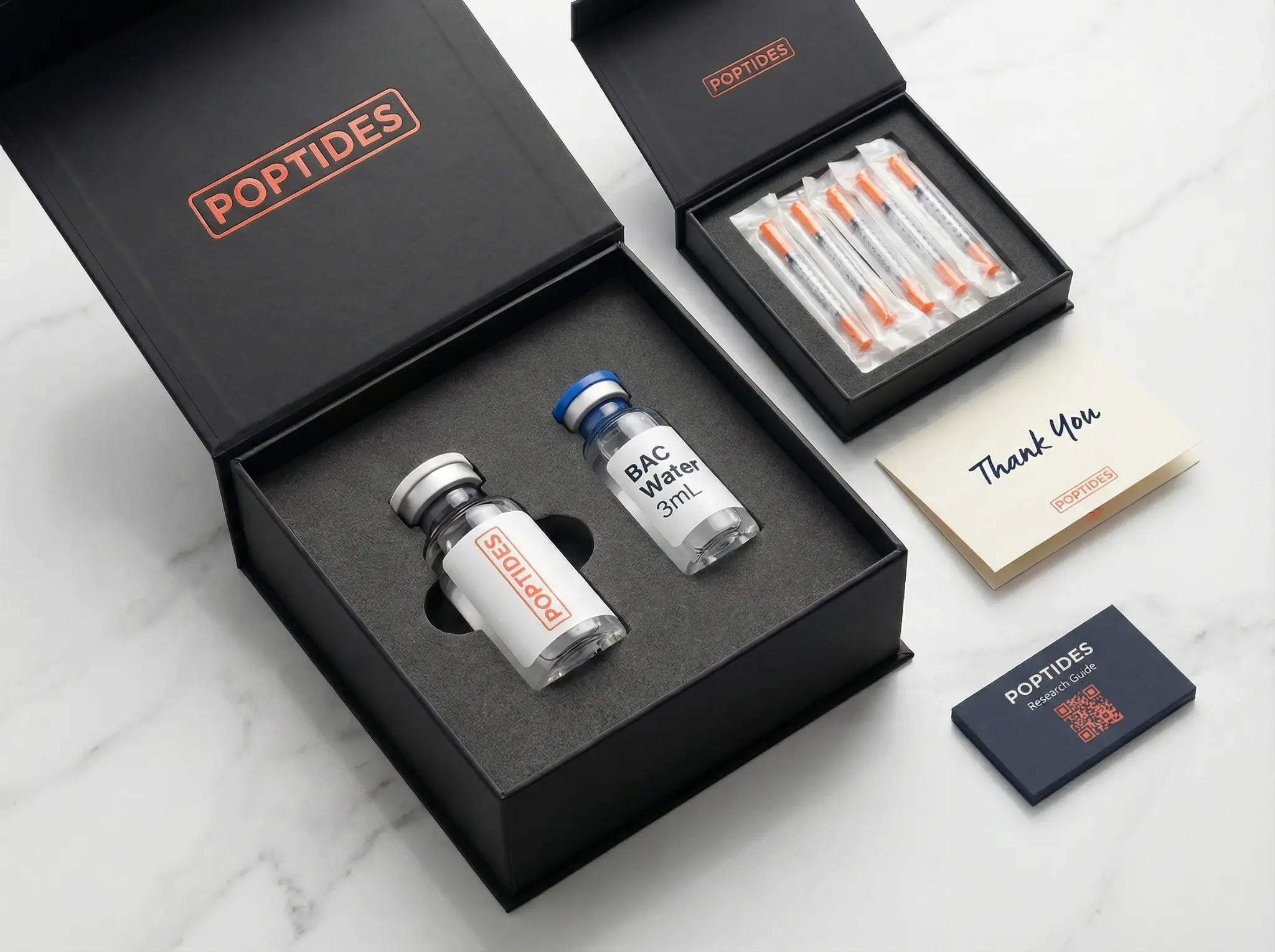
What's in the Box
Every Poptides order arrives in premium packaging, ready to use.
MT-I (Afamelanotide) Vial
Your selected amount of lyophilized MT-I (Afamelanotide) in a sealed, sterile glass vial with silver crimp cap. COA included on request.
BAC Water 3mL
Bacteriostatic water for reconstitution, included with every injectable peptide order. Maintains sterility for multi-dose use.
Syringe Kit
5 × insulin syringes with orange caps, individually sealed, in a dedicated Poptides-branded box.
Research Guide Card + Thank You Note
A QR code card linking to your product's research guide, plus a personal thank you note from the Poptides team.
Discreet Outer Packaging
All orders ship in plain, unmarked outer packaging with no reference to Poptides on the exterior.
How MT-I (Afamelanotide) Works
The mechanism of action, step by step.
Selective MC-1R Activation
Melanotan 1 (afamelanotide) is a linear analogue of alpha-MSH with high affinity and selectivity for MC-1R on melanocytes. MC-1R activation via the cAMP/PKA cascade upregulates tyrosinase and MITF transcription factor, driving eumelanin production. The linear structure confers greater MC-1R selectivity than the cyclic MT2, resulting in a more targeted tanning stimulus.
Eumelanin Upregulation
MC-1R activation shifts the melanocyte's pigment production from pheomelanin (red/yellow, UV-sensitive) toward eumelanin (brown/black, photoprotective). This eumelanin shift not only produces aesthetic darkening but provides genuine UV photoprotection — the basis for MT1's clinical development in EPP where patients are acutely UV-sensitive.
Reduced MC-4R Activity
The linear structure of MT1 produces significantly less MC-4R activation than the cyclic MT2. This means less hypothalamic and spinal cord melanocortin signalling — less nausea, fewer sexual effects, and less appetite suppression. Users seeking pure tanning benefit with minimal systemic MC effects prefer MT1 for this reason.
Photoprotective Mechanism
Beyond pigmentation, MC-1R activation has direct cellular photoprotective effects independent of melanin: it upregulates nucleotide excision repair enzymes that correct UV-induced DNA damage, reducing the mutagenic burden of sun exposure. This mechanism is part of the clinical rationale for MT1 use in photosensitivity disorders.
Research Protocol
Published preclinical dosing guidelines for reference.
The Science Behind It
Peer-reviewed research supporting the mechanism of MT-I (Afamelanotide).
Afamelanotide (Scenesse) for erythropoietic protoporphyria — phase 3 RCT
Afamelanotide implants (16 mg) in EPP patients significantly increased pain-free sunlight exposure compared to placebo, with histological evidence of enhanced eumelanin production providing genuine photoprotection beyond aesthetic tanning.
New England Journal of Medicine, 2015Afamelanotide versus Melanotan II — receptor selectivity and side-effect comparison
Comparative receptor binding studies confirmed afamelanotide's superior MC-1R selectivity versus MT2. In human volunteers receiving equivalent tanning doses, afamelanotide produced significantly less nausea and fewer MC-4R-related side effects while producing equivalent tanning outcomes.
Journal of Investigative Dermatology, 2004MC-1R activation and nucleotide excision DNA repair enhancement
Afamelanotide treatment significantly increased XPC and XPD repair protein expression in human melanocytes, enhancing the capacity for UV-induced cyclobutane pyrimidine dimer repair — establishing a photoprotective mechanism independent of melanin production.
Nature Genetics, 2012Customer Reviews
Verified purchases from Canadian customers.
All the tan, none of the nausea
Tried MT2 and could not handle the nausea even at 0.25 mg. Switched to MT1 at 1 mg and had almost no side effects. Tan came in over 3 weeks with minimal sun exposure. For fair-skinned people who want a clean protocol, MT1 is the answer.
Scenesse equivalent without the prescription cost
My dermatologist mentioned afamelanotide for my photosensitivity. The branded implant is prohibitively expensive. Research-grade MT1 via subcutaneous injection delivers the same active compound at a fraction of the cost. Pigmentation response is excellent.
Cleaner profile but needs more dose
MT1 requires a higher dose than MT2 for equivalent tanning but the trade-off in side effects is worth it. Currently at 1.5 mg daily in loading and tolerating very well. Colour is building steadily.
Frequently Asked Questions
You May Also Like
 MT-I (Afamelanotide)