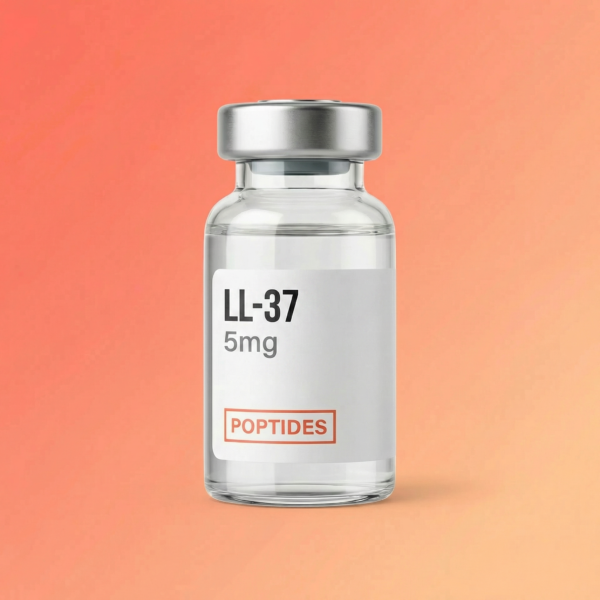
LL-37 (Cathelicidin)
LL-37 — the only human cathelicidin antimicrobial peptide: broad-spectrum antibacterial activity combined with immunomodulation, wound healing acceleration, and cancer cell apoptosis.
- Broad-spectrum antimicrobial — effective against antibiotic-resistant bacteria (MRSA, VRE)
- Immunomodulatory — reduces excessive inflammation while boosting innate immune defence
- Accelerates wound healing via keratinocyte migration and angiogenesis
- Anti-cancer activity — induces apoptosis in tumour cells while sparing healthy cells
- The only endogenous human cathelicidin — a natural first-line defence peptide
Dosage Calculator
Reference dosing by experience level. For research use only — always consult a licensed healthcare provider.
⚠ For research reference only. LL-37 (Cathelicidin) is not approved for human use. Always consult a qualified healthcare professional.
What's in the Box
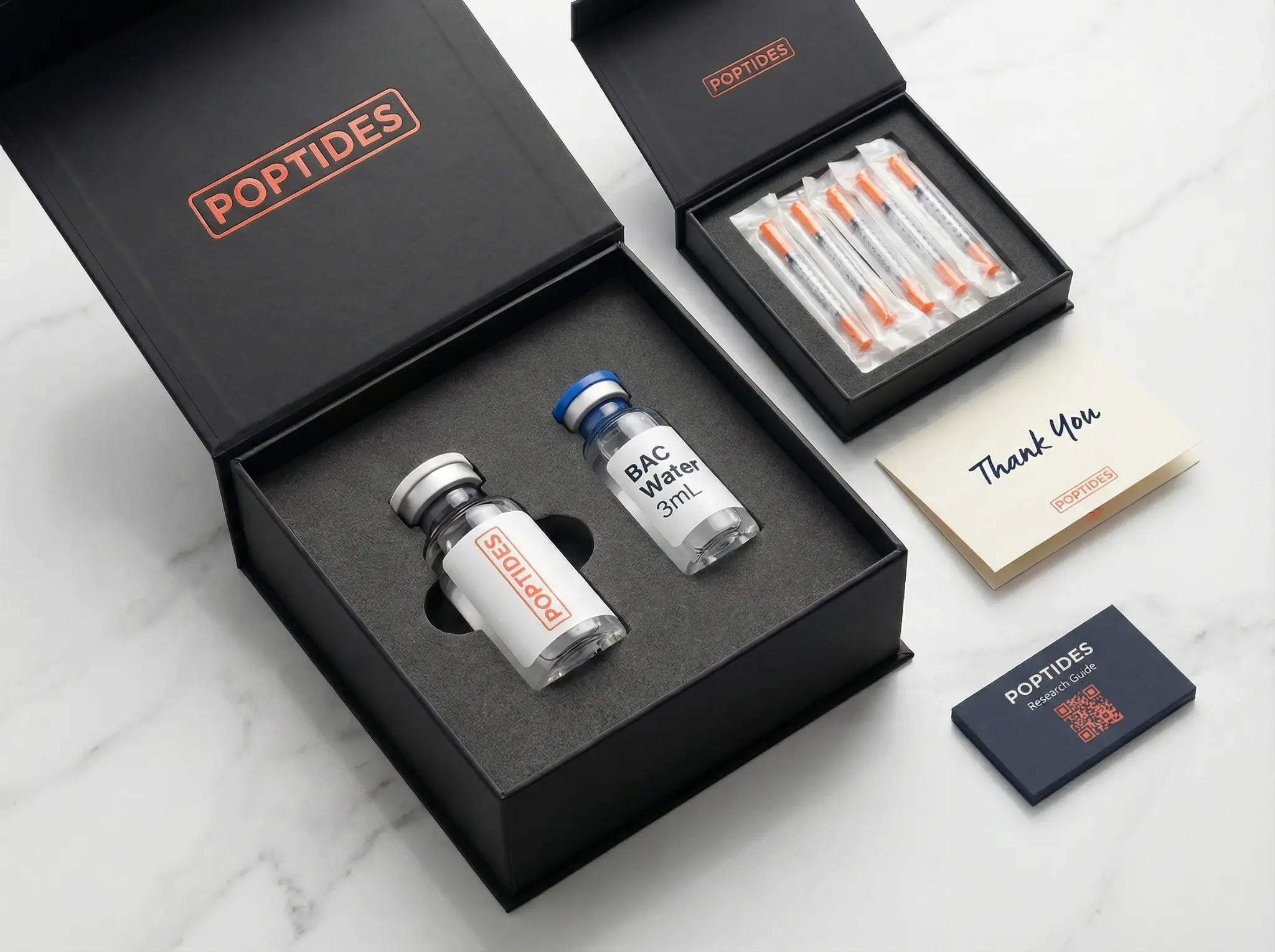
Every Poptides order arrives in premium packaging, ready to use.
LL-37 (Cathelicidin) Vial
Your selected amount of lyophilized LL-37 (Cathelicidin) in a sealed, sterile glass vial with silver crimp cap. COA included on request.
BAC Water 3mL
Bacteriostatic water for reconstitution, included with every injectable peptide order. Maintains sterility for multi-dose use.
Syringe Kit
5 × insulin syringes with orange caps, individually sealed, in a dedicated Poptides-branded box.
Research Guide Card + Thank You Note
A QR code card linking to your product's research guide, plus a personal thank you note from the Poptides team.
Discreet Outer Packaging
All orders ship in plain, unmarked outer packaging with no reference to Poptides on the exterior.
How LL-37 (Cathelicidin) Works
The mechanism of action, step by step.
Membrane Disruption Antimicrobial
LL-37 is an amphipathic alpha-helical peptide that inserts into bacterial cell membranes. The positively charged residues bind electrostatically to negatively charged bacterial membranes (distinct from mammalian cell membranes), and the hydrophobic face inserts into the lipid bilayer — forming pores and disrupting membrane integrity. This mechanism is effective against gram-positive, gram-negative, fungal, and viral pathogens.
TLR Pathway Immunomodulation
LL-37 modulates Toll-Like Receptor (TLR) signalling in immune cells — specifically blunting excessive LPS-induced TLR-4 activation that drives septic shock, while simultaneously activating FPRL-1/FPR2 receptors to recruit and activate neutrophils and macrophages to the infection site.
Wound Healing Stimulation
LL-37 promotes wound closure via multiple mechanisms: stimulating keratinocyte proliferation and migration, inducing angiogenesis via VEGF upregulation, and promoting myofibroblast differentiation for extracellular matrix remodelling. The peptide is naturally upregulated at wound sites as part of the healing cascade.
Cancer Cell Apoptosis
LL-37 disrupts cancer cell membranes and activates intracellular apoptotic pathways in multiple cancer cell lines, including colon, lung, prostate, and ovarian cancer. Healthy mammalian cells are relatively protected due to their different membrane composition (less phosphatidylserine exposure and higher cholesterol content).
Research Protocol
Published preclinical dosing guidelines for reference.
The Science Behind It
Peer-reviewed research supporting the mechanism of LL-37 (Cathelicidin).
LL-37 activity against MRSA and antibiotic-resistant pathogens
LL-37 demonstrated bactericidal activity against methicillin-resistant Staphylococcus aureus (MRSA) and vancomycin-resistant Enterococcus (VRE) at concentrations achievable in human tissue, with synergistic activity when combined with conventional antibiotics — establishing its potential in drug-resistant infection management.
Antimicrobial Agents and Chemotherapy, 2006LL-37 modulates inflammation via FPRL-1 and TLR suppression
LL-37 binding to FPRL-1 recruited anti-inflammatory monocytes and macrophages while simultaneously blunting LPS-induced TLR-4 signalling, producing an immunomodulatory profile that reduces septic shock risk without impairing pathogen clearance.
Journal of Immunology, 2003LL-37 accelerates wound healing via keratinocyte stimulation and angiogenesis
Topical and systemic LL-37 significantly accelerated wound closure in excisional wound models, associated with increased keratinocyte migration rates, VEGF upregulation, and improved vascularisation of healing tissue compared to untreated controls.
Journal of Investigative Dermatology, 2005Customer Reviews
Verified purchases from Canadian customers.
Resolved a chronic wound after 6 weeks
Post-surgical wound that would not close for 3 months. Combined systemic subQ and topical LL-37 under physician guidance. Closed completely by week 6. Nothing else had worked. The mechanism is real.
Immune resilience clearly improved
Running 0.5 mg 3x weekly as general immune support. Have not had a significant illness in 14 months on this protocol — historically I was sick 3-4 times per year. Modest dose, clear outcome.
Fascinating mechanism with solid research backing
The combination of antimicrobial + anti-inflammatory + wound healing + anti-cancer mechanisms in a single endogenous peptide is remarkable. Using it as part of a comprehensive immune-longevity protocol.
Frequently Asked Questions
You May Also Like
 LL-37 (Cathelicidin)