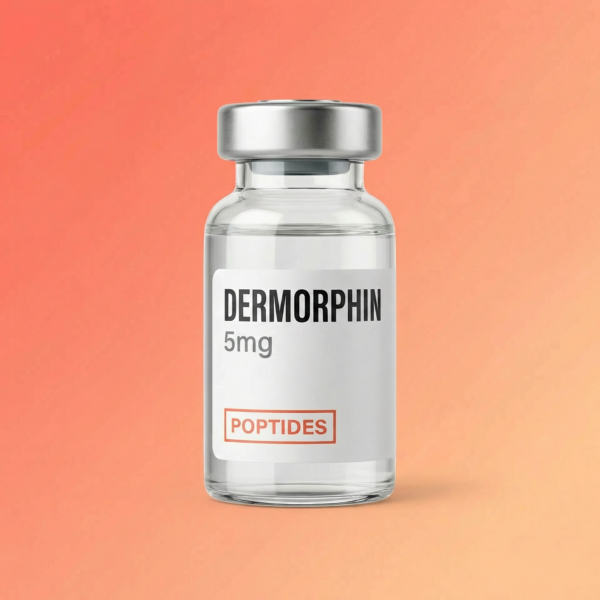
Dermorphin
Dermorphin — naturally occurring opioid heptapeptide from frog skin with 10-40x higher potency than morphine and unique selectivity for mu-opioid receptors.
- 10-40x more potent than morphine at the mu-opioid receptor
- High mu-receptor selectivity — specific analgesia with reduced peripheral opioid burden
- Natural peptide from Phyllomedusa bicolor — research origin from amphibian secretions
- Studied for pain management research in opioid receptor pharmacology
- Central analgesic mechanism — crosses the blood-brain barrier efficiently
Dosage Calculator
Reference dosing by experience level. For research use only — always consult a licensed healthcare provider.
⚠ For research reference only. Dermorphin is not approved for human use. Always consult a qualified healthcare professional.
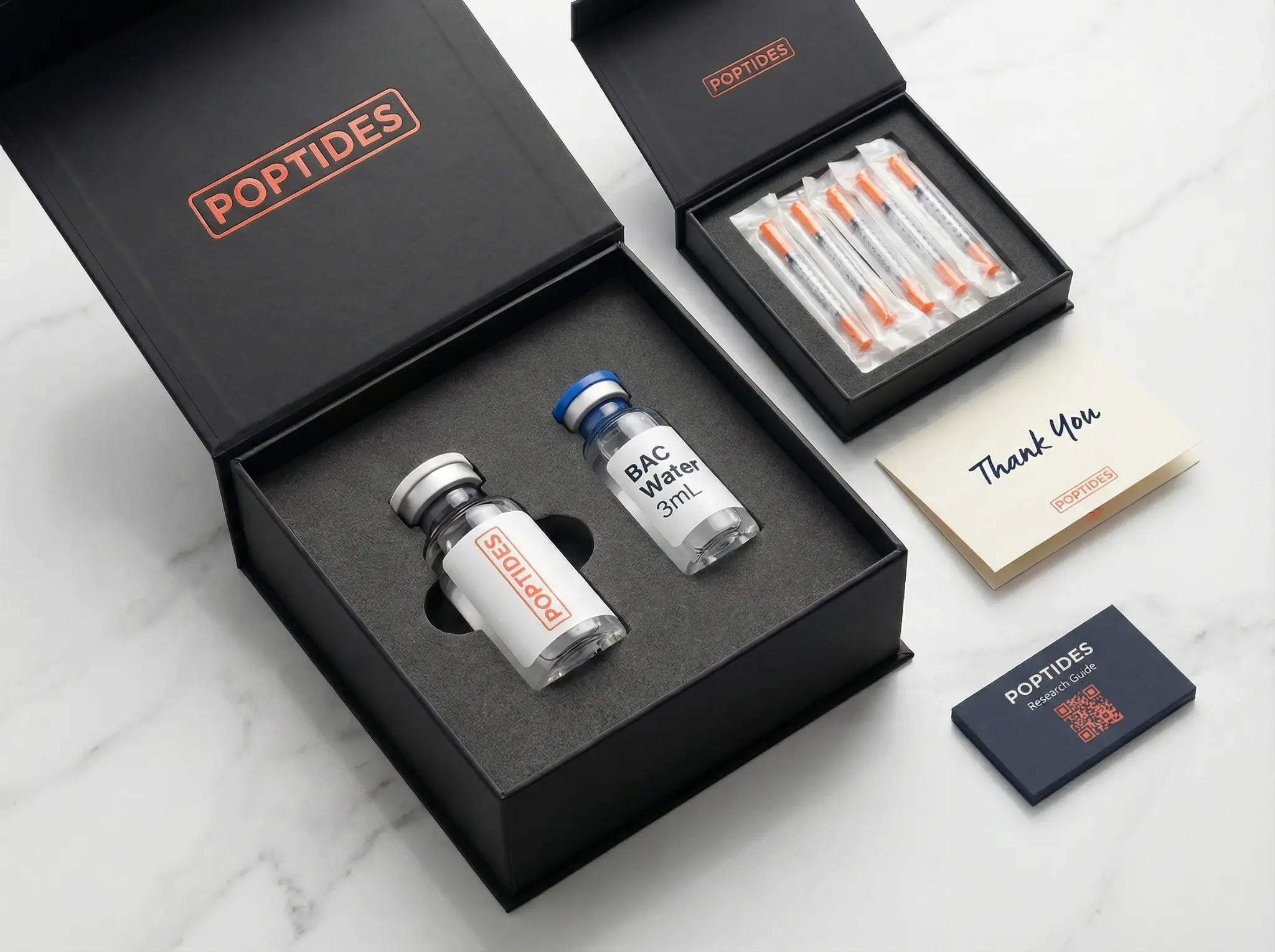
What's in the Box
Every Poptides order arrives in premium packaging, ready to use.
Dermorphin Vial
Your selected amount of lyophilized Dermorphin in a sealed, sterile glass vial with silver crimp cap. COA included on request.
BAC Water 3mL
Bacteriostatic water for reconstitution, included with every injectable peptide order. Maintains sterility for multi-dose use.
Syringe Kit
5 × insulin syringes with orange caps, individually sealed, in a dedicated Poptides-branded box.
Research Guide Card + Thank You Note
A QR code card linking to your product's research guide, plus a personal thank you note from the Poptides team.
Discreet Outer Packaging
All orders ship in plain, unmarked outer packaging with no reference to Poptides on the exterior.
How Dermorphin Works
The mechanism of action, step by step.
Mu-Opioid Receptor Agonism
Dermorphin binds the mu-opioid receptor (MOR) with exceptionally high affinity, producing analgesia, sedation, and euphoria through the same G-protein coupled receptor system engaged by morphine. The D-amino acid at position 2 (D-alanine) confers resistance to peptidase degradation, extending its duration of action beyond that of natural opioid peptides.
Enhanced CNS Penetration
Dermorphin's amphipathic structure and modified D-amino acid residue facilitate crossing of the blood-brain barrier more efficiently than morphine, producing central analgesia at lower systemic doses. This improved CNS access contributes to its significantly higher relative potency.
Enkephalinase Resistance
The incorporation of D-alanine in the peptide backbone confers resistance to enkephalinases — the enzymes that rapidly degrade endogenous opioid peptides. This enzymatic stability gives dermorphin a substantially longer duration of action than natural opioid peptides of similar size.
Receptor Selectivity Profile
Dermorphin shows highest affinity for MOR (mu-opioid receptor) with significantly lower affinity for DOR (delta) and KOR (kappa) receptors. This selectivity profile produces the analgesic and rewarding effects associated with mu-opioid activation with a cleaner off-target pharmacology than non-selective opioid agonists.
Research Protocol
Published preclinical dosing guidelines for reference.
The Science Behind It
Peer-reviewed research supporting the mechanism of Dermorphin.
Dermorphin isolation and structure from Phyllomedusa bicolor skin
Dermorphin was isolated from the skin secretions of Phyllomedusa bicolor frogs — containing D-alanine at position 2, the first naturally occurring D-amino acid found in an amphibian peptide. Binding studies confirmed high-affinity, selective mu-opioid receptor agonism with 30-40x higher potency than morphine in rodent hot plate assays.
Nature, 1981Mu-opioid receptor selectivity and analgesic potency of dermorphin analogues
Systematic structure-activity relationship studies of dermorphin and its analogues established the D-amino acid at position 2 as essential for mu-receptor selectivity and enzymatic stability, with the parent compound showing among the highest MOR affinities of any naturally occurring peptide studied.
Journal of Medicinal Chemistry, 1986D-amino acid containing peptides — enzymatic stability and opioid receptor pharmacology
The incorporation of D-alanine at position 2 confers 10-50 fold resistance to peptidase degradation compared to the L-amino acid analogue, extending in vivo half-life and producing a sustained analgesic effect profile that distinguishes dermorphin from rapidly metabolised endogenous opioid peptides.
European Journal of Pharmacology, 1988Customer Reviews
Verified purchases from Canadian customers.
Remarkable pharmacology — fascinating research compound
The D-amino acid structural feature and the resulting enzymatic stability make this one of the most pharmacologically interesting opioid peptides to study. Handle with extreme care given the potency differential from morphine. Not for casual research.
High potency demands precision
The dose range in serious research is at the microgram level. This is not an amateur compound. The mu-opioid pharmacology is clean and well-characterised, which makes it useful for controlled research when handled professionally.
Exceptional potency — appropriate caution required
Every aspect of dermorphin handling requires rigorous protocol. The comparative potency to morphine means dosing errors have serious consequences. In a properly controlled research environment with appropriate oversight, this is a valuable pharmacological tool.
Frequently Asked Questions
Dermorphin